My services
What I can assist you with?

Practice Performance Review
A focused diagnostic to help your practice understand where time, money and energy are being lost, and how to prioritise improvements.
What it includes:
- A short questionnaire to capture pain points.
- A 1–2 hour review (remote or in‑person) of workflows, admin handling, access systems and KPIs.
- A written summary highlighting key issues.
- A clear 30–90 day action plan with 3–5 prioritised next steps.
This aligns with NHS expectations that practices should review and improve access, workload, and outcomes in a structured way.
It helps practices identify which processes are slowing down their ability to meet access and continuity targets, allowing them to address bottlenecks quickly.
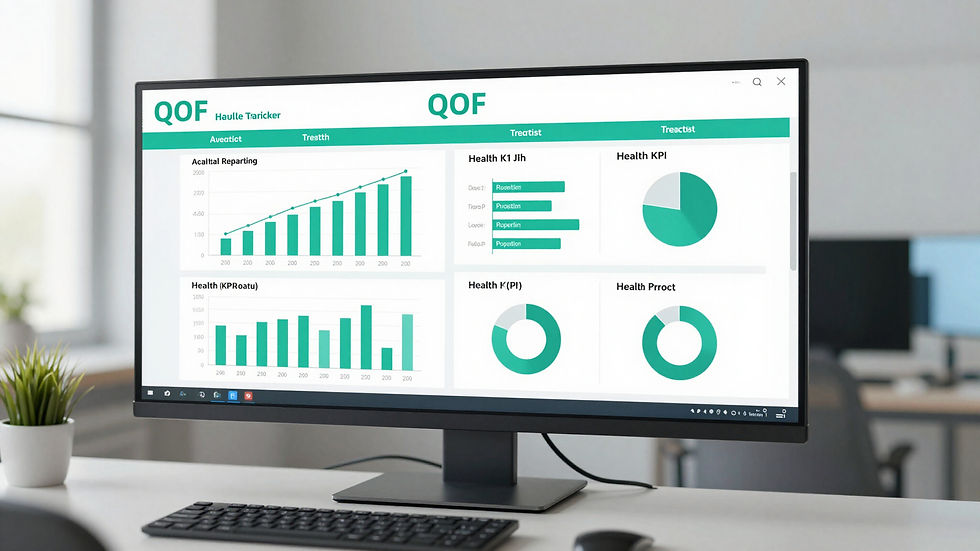
QOF & KPI Optimisation
Targeted support to improve performance against QOF and related practice KPIs such as: access, continuity, and workload management.
What it includes:
- Review of current QOF results, register quality and coding practice.
- Identification of indicators where the practice is falling short or under‑performing.
- Suggested process changes (e.g., review schedules, coding checks, recall triggers, flagging).
- Guidance on how to monitor progress and report internally.
- Support to embed changes with the PM or key admin lead.
QOF remains a key financial and quality lever in the GP contract, with specific thresholds and guidance for each domain.
Tightening register and recall processes also supports patient safety and enables practices to meet NHS expectations on structured care for long‑term conditions and preventive activity.

Team Training & Development
Focused training for reception and admin teams to improve confidence and consistency.
What it includes:
- 1.5–2 hour sessions (on‑site or remote) on topics such as: efficient inbox management, patient communication and triage, recall and documentation best practice.
- Simple, practice‑specific materials and checklists.
- Q&A and follow‑up to ensure understanding.
NHS practice‑website and operational guidance stress clear patient journeys and consistent communication, which depend heavily on front‑desk and admin staff.
Well‑trained teams can: reduce appointment‑handling errors, improve patient experience, support better registration and coding, all of which contribute to smoother access and stronger QOF performance.

Admin Workflow & Inbox Improvement
Designed to streamline how tasks, inboxes, tests, recalls and documentation move through your practice.
What it includes:
- Mapping of current admin routes and decision points.
- Identification of duplication, delays and unclear responsibilities.
- Redesign of key workflows (e.g., test results, DNAs, referrals, recall, patient queries).
- Simple checklists and protocols for staff.
- A 1–2 follow‑up sessions to fine‑tune the new system.
Busy practices often struggle with unstructured workflows, which can affect timely follow‑up and patient safety. Streamlining admin supports: better appointment and recall management, more accurate data capture, reduced risk of missed actions and complaints.
This directly supports QOF‑related indicators that depend on recalls, reviews, and documentation quality.

Practice Manager Support
Ongoing support for the person who carries the operational load in your practice.
What it includes:
- One‑to‑one monthly or fortnightly sessions.
- Help prioritising improvement projects and managing workload.
- Guidance on decision‑making, team leadership and governance.
- Ad‑hoc support via email for specific questions.
- Review of KPI dashboards and action plans.
Strong practice management leadership is highlighted in NHS guidance as a core enabler of effective access, continuity and quality.
Having an external, experienced sounding board can help practice managers implement changes that otherwise stall due to pressure or lack of capacity.

Ongoing Optimisation Retainer
For practices that want continuous improvement rather than one‑off projects.
What it includes:
- Monthly or quarterly review of KPIs (e.g., access, QOF elements, DNAs, workload patterns).
- One priority improvement focus per period.
- Update of action plans and dashboards.
- Support to embed continuous improvement culture.
NHS and ICB documents encourage practices to use data and regular review to improve performance over time. A retainer model mirrors this by giving you a sustainable way to keep improving access, QOF, and workflow, without the cost of a full‑time internal role.